How Much Does Podcast Music Licensing Cost? Free, Subscription or Buy Once
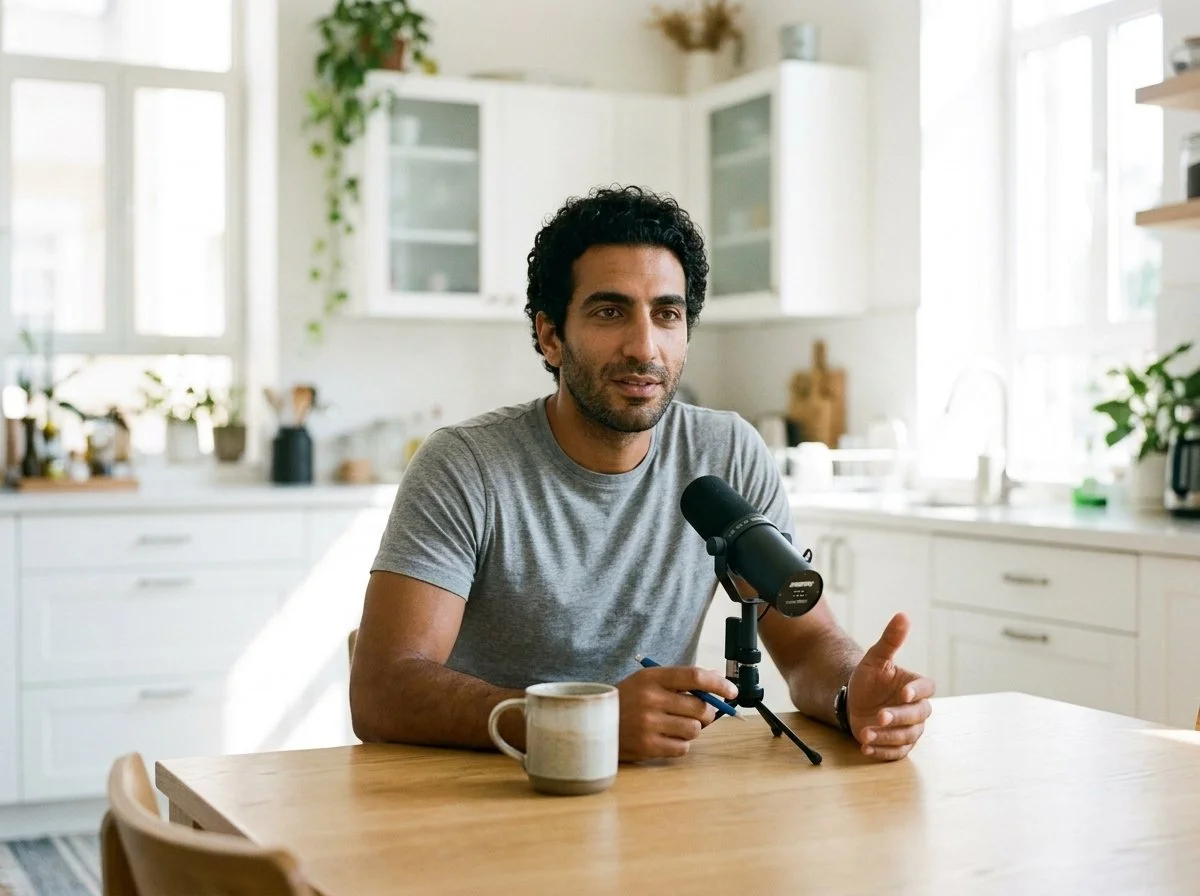
A podcast music licence can cost nothing, a monthly fee, or a one-off price. Free music has no price tag but often has limits. Subscriptions run every month for as long as you want cover. Buying once costs more up front, then nothing ever again.
We write and sell intro music with a licence attached. So we've spent a lot of time on the question of what creators actually pay, and what they get for it. This guide walks through the three routes, what each one really costs over time, and why fair use won't get you out of paying at all.
What You're Paying For With a Podcast Music Licence
You're paying for permission. The music still belongs to whoever made it. A licence sets out what you can do with it, where, and for how long.
Every recorded track has two parts. There's the composition, which is the tune and the chords. And there's the recording, which is the actual audio file. To use a track, you need permission for both. When one composer writes and records the track, one licence can cover both, which keeps things simple.
If you'd like the full picture of what a licence covers, see the podcast music licensing page. This post is about the money side.
Can You Skip the Cost? Podcast Music and Fair Use
For a podcast intro, almost never. Fair use is a defence in US law. It only gets weighed up after someone complains, and only a court can decide it.
Courts look at things like why you used the music, how much you used, and whether your use hurts the owner's market. A theme tune that plays at the start of every episode is about the worst case. It's used in full, on purpose, to make your show sound better. That's exactly what music is licensed for.
A few myths come up a lot:
- "Ten seconds is fine." There's no safe number of seconds. A short, famous hook can still be infringement.
- "I'm not making money." Being non-commercial can help a fair use case, but it doesn't make the use legal on its own.
- "I credited the artist." A credit is a nice touch. You still need a licence.
Outside the US, the rules are often tighter still. The UK, for example, has a narrower idea called fair dealing. Either way, the safe plan for an intro is the same: get a licence.
Route One: Free Music and Creative Commons
Free music costs nothing to download. The cost shows up in other ways.
Many free tracks use Creative Commons licences. Some of these let you do almost anything. Others need a credit in every episode, or ban commercial use. If you later add ads or a sponsor, a "non-commercial" licence no longer fits your show.
There are other catches too:
- Thousands of shows may use the same track, so it won't feel like yours.
- Sites change their terms, and tracks get taken down.
- Now and then, someone uploads music they don't own and calls it free.
For a closer look at where to find intros and what to check, see our guide to royalty free podcast intro music.
Free can work for a hobby show with no plans to grow. If you go this way, screenshot the licence on the day you download the track and keep it with the file.
Route Two: Music Subscriptions
A subscription gives you a large library for a monthly or yearly fee. You pay for access, and the licence usually covers what you publish while you're a member.
If you edit lots of videos and need new music every week, a subscription can be good value. For a podcast intro, the maths looks different. You need one track. You'll use it for years. And you'll keep paying the fee the whole time.
The bigger question is what happens when you cancel. Terms differ between services. Some keep content you published while subscribed covered for good. Some only cover it while you keep paying. Others draw a line at new uploads. Read the cancellation section before you sign up, because your intro is in every episode, old and new.
Route Three: Buy Once
Buying once means paying a single price for a licence that never expires. There's no renewal date and no monthly fee.
The up-front cost is higher than free and higher than one month of a subscription. Over the life of a show, it's usually the lowest. You pay once, keep your proof of purchase, and stop thinking about it.
This is the model we use for Introbleep intro music. You pick a track, pay once, and get a licence certificate made out to you.
What a Podcast Music Licence Costs: Real Prices
Here's how the numbers look at Introbleep. The store shows prices in your own currency.
- Free music: no charge, with limits that vary by track.
- Standard track: £20 ($26), once. Non-exclusive, so other creators can buy the same track.
- Exclusive track: £160 ($200), once. Sold to one buyer, then taken off sale.
- Custom composition: from £1,200 ($1,500). A new piece written to your brief.
Now compare that with a subscription over time. Take any monthly fee and multiply it by the number of months your show runs. Even a small fee, kept up for three or four years, often passes the price of a one-off track many times over. And if the terms only cover you while you pay, the meter never stops.
That's why we think buying once makes the most sense for an intro. It's one piece of music that you'll use for as long as the show runs.
The Hidden Costs People Forget
The price on the page is only part of the cost. A few other costs show up later, and they can add up.
Your Time
Big libraries have thousands of tracks. Finding the right one can take hours, and that time has a value. A small, focused store is quicker to search.
Lost Ad Money
If a track gets claimed on YouTube, the ad money from that video can go to the claimant. Clearing the claim takes time, and you may lose money while it's open.
Re-Editing Old Episodes
If a licence ends, you may need to swap the music in every past episode. For a show with a hundred episodes, that's a lot of work. It's the strongest reason to pick a licence that lasts for good.
Changing Your Sound
If you change your intro, listeners have to learn a new one. That's fine once, when you rebrand. It's a pain if a licence problem forces your hand.
What to Check in Any Licence Before You Pay
Whatever route you choose, check these six things first. If the answer to any of them is unclear, ask the seller before you buy.
- Commercial use. Are ads, sponsorships and paid feeds covered?
- Platforms. Does it name podcasts, YouTube and social, including video podcasts?
- Length of cover. Is it perpetual, or does it end when you stop paying?
- Credit. Do you have to credit the composer, and where?
- Edits. Can you trim the track, fade it and talk over it?
- Proof. Do you get a certificate or written licence with your name on it?
What an Introbleep Licence Covers
Every Introbleep purchase comes with a Commercial Use Licence Certificate. It's made out to you and lists the track, the licence type, the purchase date and your order reference.
The licence covers podcasts, YouTube, Twitch and social media, including monetised content. It's worldwide and perpetual. You don't need to credit us. You can trim the track, fade it and layer your voice over it.
There are a few things you can't do. You can't resell or share the files, claim the music as your own, or register it with a performing rights organisation. That last rule protects you. If one buyer registers a track, it can trigger claims against every other buyer.
Making shows for clients? The standard licence covers client work. If you need a whole sound kit across many shows, see podcast music for agencies.
FAQs
Do I need a licence for podcast intro music?
Yes, unless you made the music yourself. Someone owns every track, and using it without permission is a risk. A licence sets out exactly what you can do, so you can publish without worry.
Can I use 10 seconds of a song under fair use?
There's no rule that makes a short clip safe. Fair use is a defence a court weighs up after a complaint, and a theme that opens every episode is a weak case. For an intro, buy a licence instead.
What happens if I cancel a music subscription?
That depends on the service. Some keep what you published while subscribed covered, and some don't. Read the cancellation terms before you sign up, because your intro sits in every past episode.
Does a royalty-free licence cover monetised Spotify and YouTube?
Only if it includes commercial use. Many do, but some free licences don't. Every Introbleep licence covers monetised podcasts and videos on every platform.
Why can't I register licensed music with a PRO?
Because you don't own the music, you only have a licence to use it. Registering it can also cause claims against everyone else who bought the same track. Licences like ours ban it for that reason.